
Contact Us
561-391-5331
Our Location
1050 NW 15th St 211A, Boca Raton, FL, 33486, US

Book An Appointment
* Fields with asterisks are required.Laser Treatment for Snoring in Boca Raton, FL
The effects of snoring may extend beyond the individual, disturbing their own rest and their partner’s sleep. It occurs when air does not move freely through the nose and mouth during sleep. As the airway narrows, surrounding tissues can vibrate as air passes through, creating the familiar sound of snoring.
At Dental TMJ Pain, Reda A. Abdel-Fattah, DDS, and Magda Abdel Fattah, DMD, MS, provide care focused on orofacial pain, TMJ disorders, and obstructive sleep apnea. For appropriate patients interested in laser treatment for snoring in Boca Raton, NightLase® provides a non-invasive approach that targets tissues associated with airway narrowing and vibration.
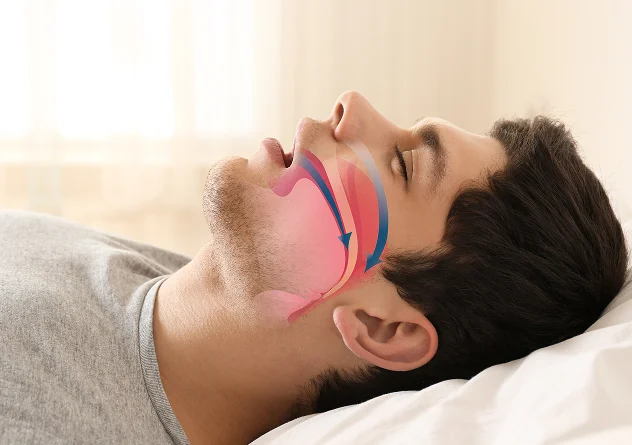
What Is NightLase® Laser Snoring Treatment?
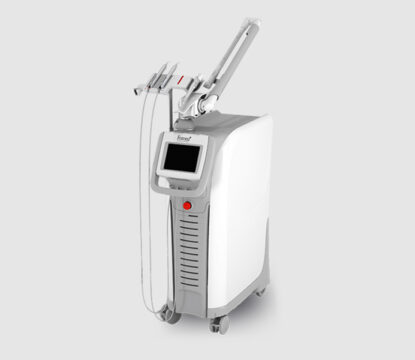
NightLase® is a Fotona® laser procedure used to treat snoring. Instead of surgically removing tissue, controlled laser energy is applied to targeted tissues within the airway.
The laser gently heats these areas, creating a tightening effect intended to help keep the airway more open. Addressing tissue that contributes to narrowing may reduce the vibration responsible for snoring.
For patients seeking a laser treatment for snoring, NightLase® offers a non-surgical option. The procedure requires no anesthesia and does not involve surgical incisions. Patients can also resume their normal daily routine immediately following treatment.
Why Does Snoring Occur?
Snoring can develop when airflow through the nose and mouth becomes restricted during sleep. Narrowing within the airway can cause tissues to vibrate, producing an audible sound.
Several factors may contribute to this narrowing or increase the likelihood of snoring. The NightLase® patient information identifies age, nasal and sinus problems, excess body weight, alcohol consumption, smoking, medications, and sleep posture among potential contributing factors.
Because snoring does not necessarily have the same cause in every person, choosing among available snoring solutions should begin with an individual evaluation. Understanding the patient’s symptoms and related concerns can help determine what type of care may be appropriate rather than focusing solely on reducing nighttime noise.
When Should You Discuss Snoring With a Professional?
Occasional snoring and persistent nighttime symptoms are not necessarily the same. If snoring regularly affects your rest or repeatedly disturbs your partner’s sleep, discussing it with a qualified provider can help you better understand your options.
People affected by snoring may also experience tiredness, morning headaches, irritability, or dry mouth. The practice’s NightLase® information identifies these as possible consequences of disrupted sleep from snoring.
Professional evaluation becomes particularly important when snoring occurs alongside concerns about nighttime breathing. Snoring can be present in people with obstructive sleep apnea, although snoring alone does not establish an OSA diagnosis.
Is NightLase® Appropriate for Everyone Who Snores?
Not every patient who snores will necessarily be an appropriate candidate for snoring laser treatment. Various factors can contribute to airway narrowing, so treatment should not be selected solely on the presence or loudness of snoring.
An evaluation gives the provider an opportunity to consider the nature of your symptoms and determine whether NightLase® may be suitable. If another sleep-related concern is suspected, appropriate assessment may also be necessary before deciding on a course of care.
This individualized approach helps ensure that treatment for snoring is considered within the broader context of the patient’s symptoms rather than applying the same solution to everyone.

Other Services
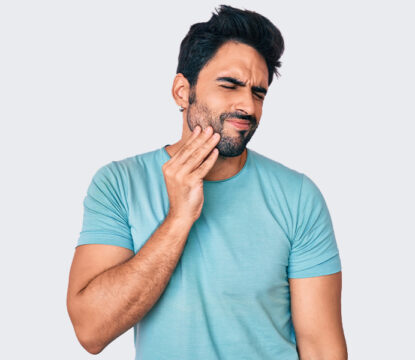
TMJ is the most common type of orofacial discomfort that our dentists near you treat. You have two...
At Dental TMJ Sleep Apnea, we specialize in more than just TMJ disorders and sleep apnea.

Do you need a new dentist to perform regular dental exams near you? Dental TMJ Pain in Boca Raton knows what their patients need.
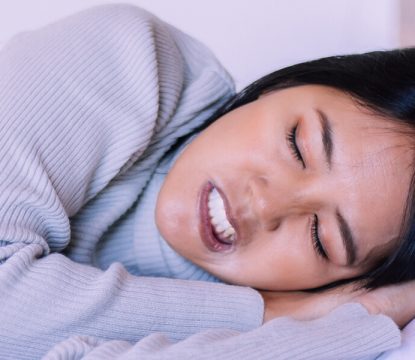
It’s not easy to tell if you have bruxism since it occurs while you’re asleep.
At Dental TMJ Pain and Obstructive Sleep Apnea, we are committed...

Dental TMJ Pain offers advanced, personalized solution...

At Dental TMJ Pain, we offer Shockwave Therapy in Boca Raton, a cutting-edge, noninvasive...

Are you searching for Non-Invasive TMJ Therapy in Boca Raton? At Dental TMJ Pain...

Trigger Points TMJ Therapy targets specific areas of tension within the jaw, neck, and surrounding muscles.

Legal cases involving dental treatment often require more than reviewing clinical records and diagnostic images...
Autho's Bio
Dr. Reda A. Abdel-Fattah
Dr. Abdel-Fattah is a diplomate of the American Boards of Orofacial Pain and Craniofacial Pain, specializing in the evaluation and non-surgical treatment of TMJ-related disorders. With advanced training from UMDNJ and extensive postgraduate education, he provides evidence-based solutions for chronic jaw pain, muscle tension, and joint dysfunction.